Wondering about what character creation is like in Blades in the Dark (BitD) as compared to Dungeons & Dragons? Come along for the ride as I learn about it! I’m just now starting to get into this game system as I try to explore other ways to approach a more narrative story telling that doesn’t have as many detailed rules that focus so much around the miniature combat part of the game. In this article, I’ll focus on the piece I’ve been learning about first: creating a character.
What are Characters in Blades in the Dark?
The system makes it very clear, and repeats it throughout the book, that you are scoundrels. You are not fantastic heroes who will save the world, but you aren’t nobodies who don’t matter either. You are a survivor doing things in the dark that need doing and will help you grow your power and influence. You are trying not to be the victim, but you aren’t exactly the hero either.
The term ‘underdogs’ is used a lot, and if you think of classic heist films and television shows, they usually have that element of being up against the big corporation, or evil government, or the tyrannical mob boss. You want to root for the underdogs, but you don’t expect them to save the world.
Your characters make up a ‘Crew’ (like a party in D&D) but the Crew itself is a character in the system (more on that another day). Your goal, as a crew, is to get out there, accomplish things that support your characters advancement, and build up your reputation and hold over your area of the city. For this reason, you probably need a bit of balance in your crew in terms of abilities, but you should talk together about what type of crew you have so that you build up in support of that Crew’s needs. You don’t want to be assassins but you decide to build somebody who is really good at stealing fine art (unless somehow you can work that into an assassination).
What are the “Classes”?
For anybody coming from D&D, the first thing you are going to be looking at is for an equivalence to classes, which are called Playbooks in BitD. While BitD is a VERY different system from D&D, some of them do match up conceptually. These are the basic ones from the main book by John Harper:
| Playbook | D&D Equivalent | Notes |
|---|---|---|
| Cutter | Fighter/Barbarian | This playbook uses violence as the means to solve problems and is rewarded for doing so. If you want to be a soldier type or just a vicious killer, this is it. |
| Hound | Ranger | This is the tracker or hunter who finds the things that are missing. Not as wide-ranging as the D&D Ranger, more focused on trying to find things or people. |
| Leech | Artificer? | The Leech uses odd tools and items and alchemy, seems very unlike most D&D classes. There is a special ability for being an artificer, though, so perhaps if you choose that path you will be more like that one. |
| Lurk | Rogue | The Lurk is sneaky and breaks into places, and is rewarded for avoiding confrontation. You might be more of an assassin, or more of a burglar, very similar to the D&D classics here. |
| Slide | Bard? | The Slide tries to get through things with words and convincing people, very ‘Charisma-based’ talker class. Bard is probably the closest class, but this isn’t a caster or musician, just somebody who is rewarded for talking their way through things. |
| Spider | ??? | The Spider is the mastermind who controls all the puppets and comes up with a plan. I don’t think there is really a match to D&D on this one, though there are some subclasses that provide some abilities to do some of this type of work. I don’t think I’m ready to play one of these, but it reminds me of the character in heist movies who always seems to know everybody and tells everybody what their part will be. |
| Whisper | Warlock/Wizard/Sorceror | There’s always a caster, and the Whisper is the one who delves into dark magic and demons in order to pull out some power. I put ‘Warlock’ primarily because the setting is more dark magic/demon/ghosts, but there seem to be elements of the other arcane classes as well here. |
Playbooks in media
I’ve been trying to think of the playbooks in terms of popular media I’ve consumed to try to get an idea of how they might map out. Here’s how I see a few common casts mapping to these.

Ocean’s Eleven
- Danny Ocean: Spider
- Rusty Ryan: Slide
- Saul Bloom: Slide
- Linus Caldwell: Lurk
- Basher Tarr: Leech
- Livingston Dell: Hound
- Yen: Lurk
(I know, that’s not all 11 characters, but most of the other roles like bankroller or general mechanics/technicians don’t figure into this very well)
Leverage
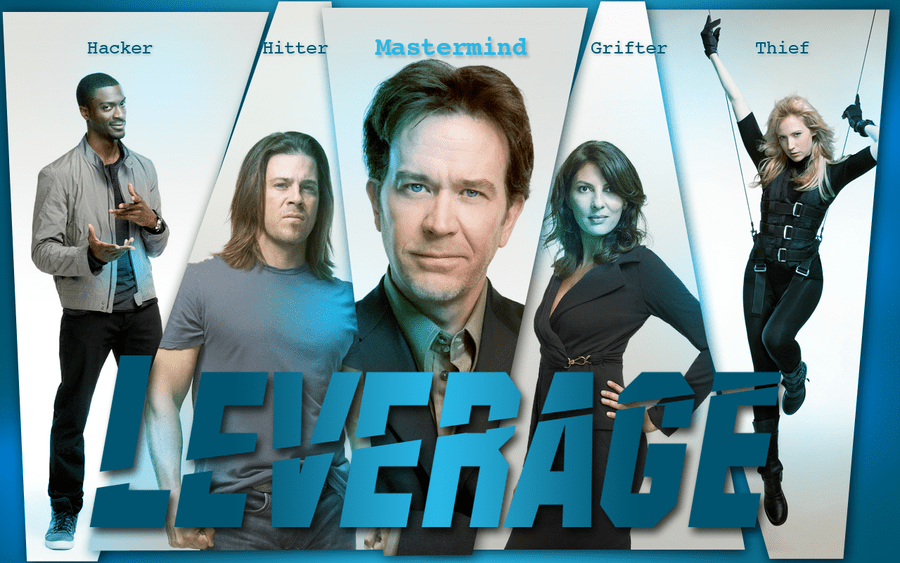
A bunch of thiefs “doing good” by sticking it to big corporations. Might make for a good Crew in BitD!
- Nathan Ford: Spider
- Eliot Spencer: Cutter
- Sophie Devereaux: Slide
- Alec Hardison: Leech
- Parker: Lurk
Firefly
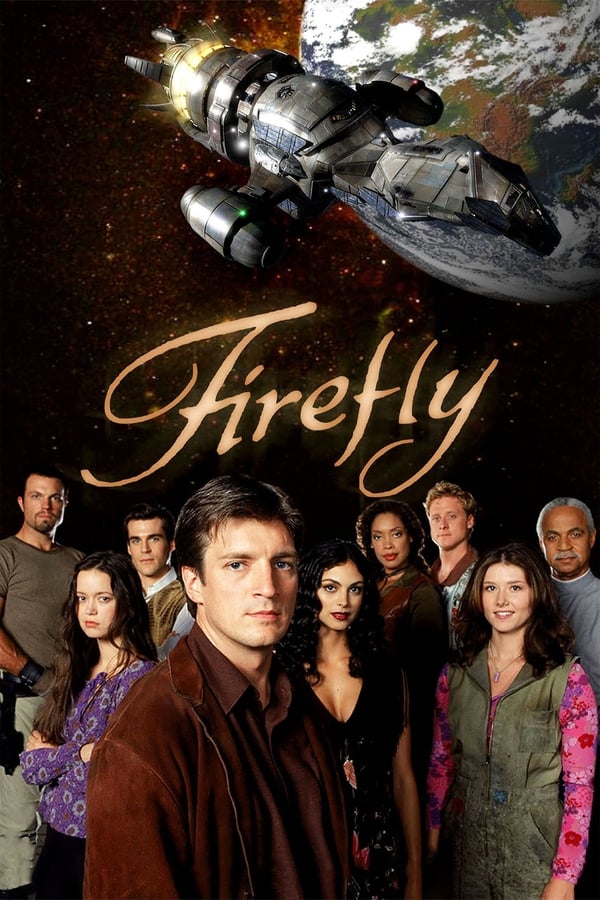
The classic sci-fi underdog team living just outside the rules of the Alliance. Honestly, this one gave me some challenges with a few of the characters, but hopefully helps a little!
- Mal Reynolds: ??
- Zoe Washburne: Cutter
- Hoban Washburne: Leech?
- Inara Serra: Slide
- Jayne Cobb: Cutter
- Kaylee Frye: Whisper?
- Derrial Book: Spider?
- Simon Tam: Leech
- River Tam: Lurk
Heritage
Playbooks are only a piece of the puzzle, you also have a ‘Heritage’ which tells you where you’re from. The closest D&D mapping is probably species/race (i.e. Dwarf, Goliath, Elf, etc.) mixed with a ‘background’ feeling as well. Essentially, you are trying to get a picture of where you are from, how you grew up, and possibly some physical traits. These are the options presented in the base rules:
- Akoros: Described as a European-like conglomerate of cultures, this is where the default setting of the city of Duskwall (or Doskvol) is located. I treat this like ‘Human’ in D&D where it’s a wide choice of where you are from and what your life was like.
- Dagger Isles: You probably spent time on a boat and don’t have a specific place you call home.
- Iruvia: Described as a ‘foreign’ desert country in “the South” (again, think European-centric) this is supposed to be more like an old Persia, Egypt, or India. Very powerful kingdoms that have a different culture making you feel a little ‘out of place’ in Doskvol.
- Severos: Nomadic horse-tribes from the deathlands, probably similar to being a Goliath Barbarian type of idea.
- Skovlan: An island kingdom near Doskvol that lost the war and was ‘unified’ into the Empire against their will. You probably have a chip on your soldier, but likely not a bunch else to your name.
- Tycheros: This is literally described as the “wierd” one. Maybe a Tiefling type of option? Supposedly part demon, you get to have a demonic physical feature that sets you apart
Background
The background in BitD feels a little like backgrounds in D&D. This is supposed to be what you did, for work or similarly, before you joined your crew. While these flavour your character they don’t seem to have the mechanical impact that a D&D background gives you. The focus is more on fleshing out your character backstory, which might influence how you do things in the narrative later. The choices provided in the book:
- Academic: Well-educated type, school or otherwise, my guess is this is going to have an interesting twist as to why you joined a crew in Duskvol
- Labor: Working-class folk, never in charge, probably already facing some sort of danger at work and maybe an easier story into why they might join a crew?
- Law: Working for those in charge, maybe even a Bluecoat, might be an interesting twist to see why they changed sides?
- Trade: This might sound similar to ‘Labor’ but seems to be described as being a more skilled craft, a merchant-level sort of tier.
- Military: Former soldiers are a common trope in gang/mob/heist stories, I imagine folks choosing a Cutter might look to this one often.
- Noble: Living the good life, or maybe used to and have fallen onto hard times? If a noble is in the trenches of the district fighting for turf, I imagine they must have a strong motivation against someone or other options have been removed from them.
- Underworld: If you are already on the streets or somehow already involved in the existing underworld, you have an easy tie-in to the crew life but maybe have some sort of axe to grind or ambition for more.
Other than picking one, the only other character creation step involved here is to decide on the specifics of your background. The above choices are provided as an option, but the details are up to you to fill in free-style to flesh out your character.
Action Dots
These dots seem to be the equivalent of D&D skills. During character creation your character will have 7 dots, with a maximum of 2 dots in any given ‘action’. The process is:
- Assign Playbook requirements (3 action dots): Your playbook (e.g. Spider, Lurk, etc.) has 3 of your 7 already set to cover the basic skills of that playbook. Mark those off. This is similar to the skill proficiencies you get from a D&D class.
- Assign Heritage action (1 action dot): You pick one that would make sense for the Heritage you took. Similar to getting a proficiency/skill bonus from a D&D species.
- Assign Background action (1 action dot): Pick one more action that your Background would influence. Similar to getting a proficiency/skill bonus from a D&D background.
- Assign final two actions (2 action dot): Full free-form, so long as you stick within your boundary of ‘max 2’. When I did this I was thinking of my character first, but after we created our Crew I got a better idea of what my role might be like and actually switched around. So I’m just warning you that Crew creation might impact what you pick here.
Most of the actions seem pretty similar to the types of things you would see in D&D Skills, but also encompass your combat activities as well :
- Command: Kind of like Intimidate
- Consort: Closer to ‘Gather Information’ from older D&D editions? Current D&D 5e might use ‘Investigate’ for this, but this is specifically about working with people in your network.
- Finesse: Close to Sleight of Hand or Acrobatics, depending on the situation
- Hunt: A more specific targeting of D&D’s Survival that is intended for tracking, but also can be used to be good at shooting things or planning ambushes. Not as much of a direct D&D mapping here, but sort of a mix between class abilities and skills.
- Prowl: You are sneakily doing something, probably a D&D Stealth sort of situation, but includes the sneaky combat bits.
- Skirmish: You are throwing down and getting into it with somebody, wraps up all the melee combat sort of things in D&D including Athletics checks for grappling and the like.
- Study: You are spending time getting more information, which could be a anything covered under Investigate, Perception, and Insight, but focused on getting very detailed.
- Survey: Closer to a Perception or Insight check in the moment, looking at the current moment around you.
- Sway: The classic Persuasion skill
- Tinker: This covers all manner of detail work, like lockpicking, disarming traps, using devices.
- Wreck: This is just pure force, no finesse. I don’t see a clear mapping to D&D here, but the idea is you use brute force to accomplish something. Maybe Athletics?
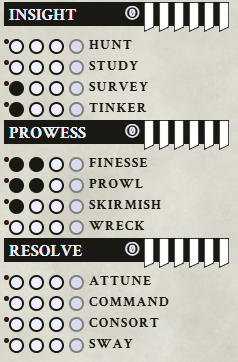
You can see my choices in the action dots in the screen grab here.
- Playbook: As a Lurk, I got 1 Finesse and 2 Prowl.
- Heritage: From Akoros, I decided that I was “from around these parts” in Duskvol. I chose a Survey action point since my character would have some advantage of knowing the districts and surviving here.
- Background: For my Trade background I decided that they worked on locks and doors and windows which would lend itself towards a Tinker action dot.
- Free Choice: To round out the character and make it fit in better with the goal of the crew (a group of assassin’s) I added an action dot for Skirmish. I then decided to double-down on the sneaky “swift hands” idea and put another dot into Finesse.
Special Abilities!
After getting your action dots laid out to define what your character is good at, you get to pick a special ability. Each playbook has a list to choose from, ultimately further refining the specialty of your particular character. Between action dots and special abilities, you can have multiple people in your crew with the same playbook that are very different from each other. I like that! It feels a little bit like choosing a subclass at level 1.
On my Lurk, for example, I chose “Infiltrator”. Even though our crew is more of a group of hired professional assassin’s, I decided I wanted to play someone that was an expert at breaking in to help the rest of the crew get where they needed to go quietly. That special ability allows my character to essentially ignore the difficulty level of the security measures.
There are way too many special abilities to go into, but each Playbook in the rules presents the ‘first’ one in the list as a standard default. If you just want to get going, picking the first one will work well. There are several examples you can look at in the basic rules: https://bladesinthedark.com/character-playbook#special-abilities
Contacts (Friends and Enemies)
This was a very interesting concept that you don’t really have in D&D. While you can certainly put some things into your backstory and work with the GM and other players to tie yourself into characters in the world, the Shady Friends & Rivals idea is really neat. In each Playbook, there is a list of characters that are in your setting that you can choose from. You choose one to be your friend, and one to be a rival.
I love that your association to these characters can then also play in with other characters in your crew (two Lurks in a crew might have the same contact chosen, but one is an ally and the other a rival). I really like that these named NPCs are just there and start tying the world together immediately, feels like a great quick-start to some integration into the setting.
For my Lurk I chose Darmot, a bluecoat, as my rival. I haven’t decided on the full story there, but I’m thinking that Darmot has almost caught me a few too many times for my liking and seems to be trying to come for me for some reason. As an ally, I chose Frake, a locksmith. I figured I would have had to train under someone for my trade and I could still tap into that in my new profession to get help.
Vice
This is an interesting game mechanic that does not have a direct parallel in D&D. Your characters need to indulge in a Vice to relax and remove stress, and you can only do this in downtime between Scores. I suppose the closest idea in D&D might spending hit dice to regain hit points during a rest? Except, in D&D, you can also heal yourself mid-combat, mid-adventure. The only way to reduce Stress during a Score is to suffer a permanent Trauma. So while ‘Vice’ feels like healing, and Stress feels like hit points, it’s a lot riskier to take Stress in Blades in the Dark.
Part of your character creation is to choose which Vice is the one that helps you remove stress. In my case, for my Lurk, I chose Obligation, which is a devotion to some cause or organization or to family. When I was thinking about it, I had a picture in my mind of how their current life might conflict with their former life as a tradesperson. I didn’t want to go the family route, so I decided to devote to an organization. I had to think of “what might reduce stress” for this character, as well as something that they could overindulge in that could be negative.
I decided they would have some allegiance to a charitable group that works to help the poor and orphaned in the streets, a group that helped them when they were a kid. So they volunteer at the soup kitchen, donate part of their income from Scores, and generally try to help the group out wherever possible. I figured that this allowed me to create a softer side of the character, but also could introduce conflict with the Scores or introduce danger with other factions who find out and use it as a weakness to exploit.
Resources:
- See the list of Vice options: https://bladesinthedark.com/character-creation#choose-your-vice
- Read more on Vice: https://bladesinthedark.com/vice
Finalizing your character
The last step is to pick a name, alias, and describe your character. I don’t want to go into too much detail on this one, it’s pretty straightforward and there are no real mechanics around this section, but this is where you finish up your unnamed character and get the persona ready for others.
Next up will be creating the Crew that you are a part of!
Credits
- Cover Image: Unknown art source, cannot be located. If you know the artist or where this is from, please let me know as I cannot find it.
- Media posters: “Firefly”, “Leverage”, and “Ocean’s Eleven” promotional images sourced from a variety of online sources.
- Action dots: Screenshot from FoundryVTT, created by Jason St-Cyr
 St-Cyr Thoughts
Leave a comment